

Modernizing Cloud Infrastructure for Scalable Life Sciences Data Platforms
Leveraging AWS migration to improve scalability, performance, and resource efficiency
99.99% Data durability
achieved through scalable cloud storage and automated redundancy
Improved compute efficiency
with on-demand scaling using AWS Lambda and AWS Batch
About the Client
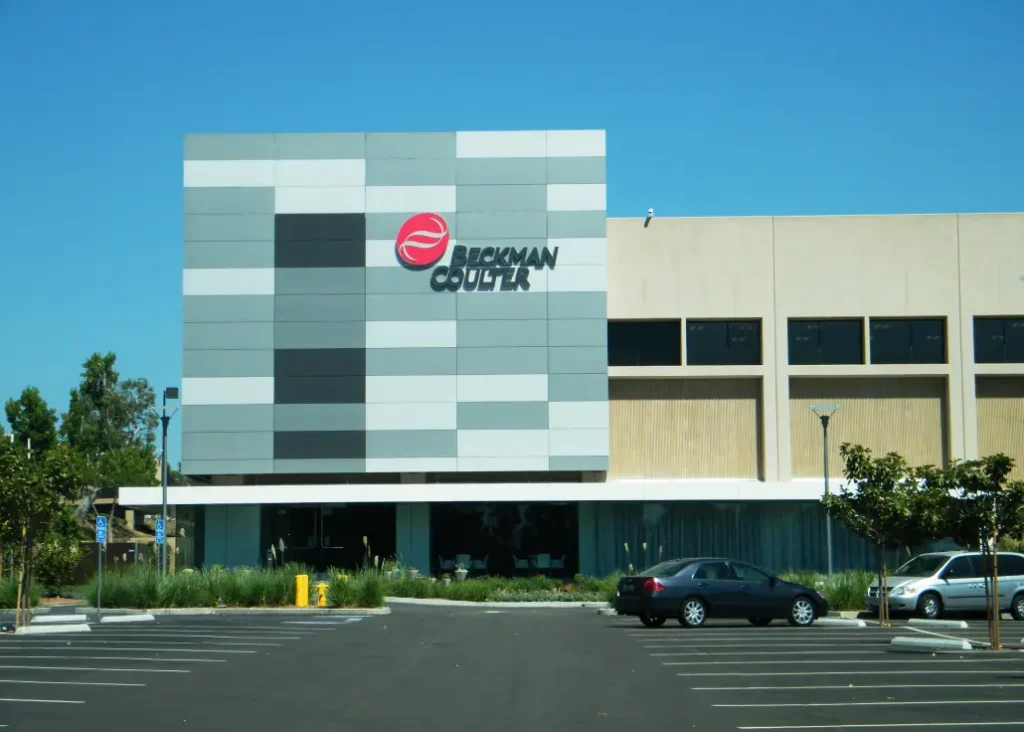
The client operates a cloud-based informatics platform, enabling research scientists to manage, analyze and share complex datasets using advanced visualization tools for deep data analysis with high performance and reliability. The organization operates in biotechnology research with a global presence.
Industry
Biotechnology Research
Years in business
90+ years
Employee count
3000+
Presence
Global
“Forgeahead helped us modernize our cloud infrastructure in a way that improved scalability, reliability, and overall efficiency for our research platform.”
Dr. Michael Harrington
Chief Information Officer
the need
The client needed a scalable and cost effective infrastructure to support growing data volumes, improve resource utilization, and streamline operations for a cloud based informatics platform used by research scientists.
The existing setup included a RAID storage system, a MySQL database, and fixed compute resources, which limited performance and restricted scalability as workloads increased.
They required a more reliable and automated infrastructure that could address performance bottlenecks while maintaining consistent platform performance under variable demand.
the solution
Forgeahead designed and implemented a tailored AWS migration strategy to modernize the client’s infrastructure, focusing on scalability, performance, and operational efficiency.
The storage layer was modernized by replacing the legacy RAID system with Amazon S3 and Amazon EFS. This transition enabled scalable storage management, automated redundancy, and significantly improved data reliability. The database layer was also upgraded by migrating the on-premises MySQL database to Amazon RDS Aurora, which enhanced performance, enabled automated scaling, and reduced the burden of database management.
Compute resources were optimized by replacing manual provisioning with AWS Lambda and AWS Batch. This shift enabled on-demand scaling, improved resource utilization, reduced operational overhead, and enhanced overall system performance. Together, these changes created a more flexible and efficient cloud-native environment capable of supporting the platform’s evolving needs.
The Impact
40% Data durability achieved
Built in redundancy and automated replication improved data reliability
Pay as you go scaling
On demand resource usage improved cost efficiency and compliance alignment
Higher availability and faster processing
Improved system responsiveness with reduced operational overhead
Automated backups and centralized monitoring
Stronger compliance and better system visibility
Reduced manual intervention in batch processing
Improved operational efficiency and workflow automation
Lower operational costs
On demand scaling reduced infrastructure overhead and simplified management
Role of AWS
AWS services played a central role in transforming the platform into a scalable and automated environment. AWS Lambda and AWS Batch enabled dynamic allocation of compute resources based on workload demand, improving efficiency while reducing operational costs.
For data storage and management, Amazon S3 and Amazon EFS provided highly scalable, durable, and available storage solutions with automated backup capabilities. Database performance and availability were enhanced through Amazon RDS Aurora, which also reduced the need for manual database administration and maintenance.
Tech Stack
The platform leveraged a comprehensive AWS ecosystem, including AWS Batch, AWS CloudFormation, AWS Systems Manager, Amazon RDS, AWS Control Tower, Amazon Route 53, AWS CodeBuild, Amazon EventBridge, AWS Lambda, AWS EC2, Amazon S3, and Amazon EFS.
The DevOps stack included Docker, Puppet, Terraform, and Chef, enabling efficient infrastructure automation and configuration management. The broader technology stack consisted of Python, Ruby, Java, and Bash, supporting application development and operational workflows.