|
Getting your Trinity Audio player ready...
|
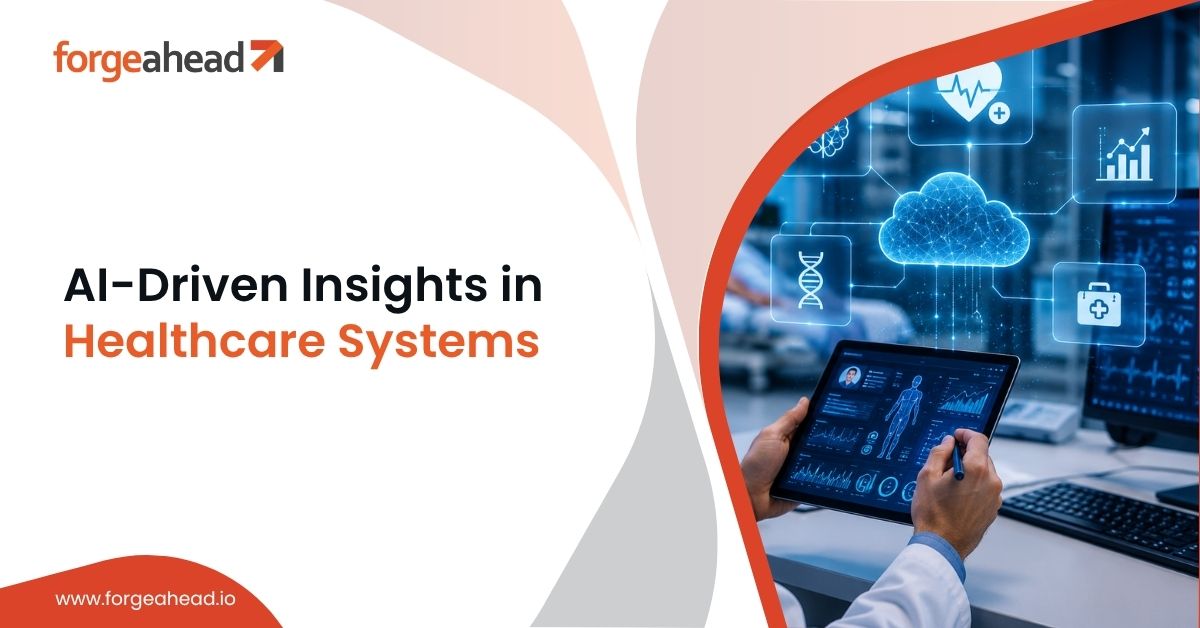
Healthcare is among the top industries actively experimenting with AI agents and workflow automation systems, according to reports. This adoption is growing as clinical environments manage rising volumes of data from electronic health records, wearable devices, and remote monitoring tools, which increase the demand for AI-driven healthcare insights.
Data in clinical settings continues to expand across multiple sources, making it harder to build a complete view of patient health. As a result, insights often remain underused even when information is available.
Cloud-native AI healthcare systems connect these data sources and enable real-time analysis across care environments. Adoption is moving toward integrated systems where AI agents support daily clinical workflows. This is reshaping care delivery through earlier detection, more informed decisions, and a continuous understanding of patient health.
How Can Cloud-Native AI Platforms Transform Healthcare Analytics?
Cloud-native AI platforms improve healthcare analytics by supporting flexible data processing across diverse systems. AI-driven healthcare insights come together through architectures built on microservices and APIs that handle structured and unstructured data sources such as genomic records and demographic information in real time. This setup supports a unified medical view where patient information connects across visits and care points, giving a continuous record that supports better clinical understanding.
- Unified Patient Data Across Healthcare Systems
Cloud-native platforms bring together patient data that is often spread across hospitals, pharmacies, and diagnostic labs. Access to this information stays centralized while maintaining interoperability across systems.
AI-driven healthcare insights become stronger when structured data such as lab results connects with unstructured inputs like physician notes and social health factors. A complete patient history becomes available in one view, supporting more informed clinical understanding. Interoperability also supports value-based care by enabling long-term visibility into patient health patterns.
- Real-Time Clinical Insights Through Continuous Monitoring
AI for patient monitoring and insights improves clinical awareness by processing continuous data from connected devices and hospital systems. Cloud-native platforms support real-time streams from IoT devices and monitoring equipment, allowing healthcare data to be evaluated as it is generated.
Early warning signals such as sepsis indicators in intensive care or cardiac irregularities detected through wearable devices can be identified quickly. Clinical responses become faster as patient conditions are tracked continuously rather than at isolated intervals.
- Predictive Risk Analysis for Early Patient Outcomes
Predictive analytics supports healthcare planning by analyzing historical records and real-time data to identify patients at higher risk of readmission or disease progression before discharge. AI models process clinical history, medication records, and socioeconomic indicators to estimate risk levels with higher accuracy.
Machine learning techniques such as XGBoost help in calculating readmission likelihood using multiple patient factors. High-risk cases can then be identified early, allowing care teams to plan follow-up support or home-based care. Early identification of risk supports better care coordination and reduces unnecessary hospital visits.
- Personalized Treatment Plans for Individual Care
AI systems support personalized treatment by using genetic information, lifestyle inputs, and medical history to guide care decisions. In areas such as oncology and cardiology, patient profiles are compared with large clinical datasets to identify treatment options that have shown better outcomes for similar cases.
Cloud-native platforms allow continuous updates to these models as new clinical data and patient vitals are added. Treatment recommendations adjust based on the latest available medical information and how each patient responds over time.
- Operational Efficiency Improving Clinical Focus
AI-powered systems reduce administrative workload in healthcare settings by automating repetitive back-office processes. These systems support documentation, medical reviews, and other routine tasks that often take up significant clinician time.
Generative AI tools assist with clinical note creation, while intelligent workflows handle administrative checks and approvals. Time saved from manual tasks allows clinicians to focus more on direct patient care and interaction.
How Do Cloud-Native Systems Secure Healthcare Data?
Healthcare systems rely on strong security frameworks to protect sensitive patient data as digital adoption grows. Cloud-native architectures support encryption, access controls, and automated audit trails that help manage data access and usage across systems.
AI-driven monitoring adds another layer by tracking usage patterns and identifying unusual activity early. Compliance requirements such as HIPAA and GDPR are integrated into system design to support responsible data handling and strengthen trust in digital healthcare platforms.
Forgeahead’s Role in Cloud-Native Healthcare Intelligence
Forgeahead is an AWS Advanced Tier Services Partner with strong experience in cloud-native modernization and healthcare software engineering. We work with healthcare organizations to bring together data from EHR systems, clinical applications, imaging platforms, and operational databases into a unified AWS-based setup that supports analytics and reporting while clinical operations continue without disruption. Forgeahead applies AI, machine learning, and generative AI on this foundation to support use cases such as risk prediction, clinical summarization, and workflow automation. The team maintains a strong focus on security, compliance, and responsible AI practices, especially for regulated healthcare environments.
Connect with Forgeahead to explore how cloud-native healthcare systems can support better clinical decision-making with a focus on secure, responsible innovation.
Frequently Asked Questions
1. How does AI improve the accuracy of patient diagnostics?
AI analyzes imaging and genomic data at scale, highlighting patterns that support earlier and more accurate diagnosis.
2. Is patient data safe in a cloud-native system?
Cloud-native systems use encryption, monitoring, and compliance controls like HIPAA to protect healthcare data.
3. Will AI eventually replace human doctors?
AI supports clinical decisions through data analysis while doctors remain central to diagnosis and treatment.
4. What is real-time situational awareness in healthcare?
It refers to continuous patient monitoring that triggers alerts when vital signs show concerning changes.
5. What role do cloud-native systems play in healthcare AI?
They provide scalable infrastructure for real-time data processing, secure storage, and continuous AI model updates across healthcare applications.