Institutions are increasingly expected to align learning outcomes with workforce needs and employability expectations, according to reports. This expectation is reshaping how education systems are designed, delivered, and measured, with stronger emphasis on outcomes that connect academic learning to real world application.
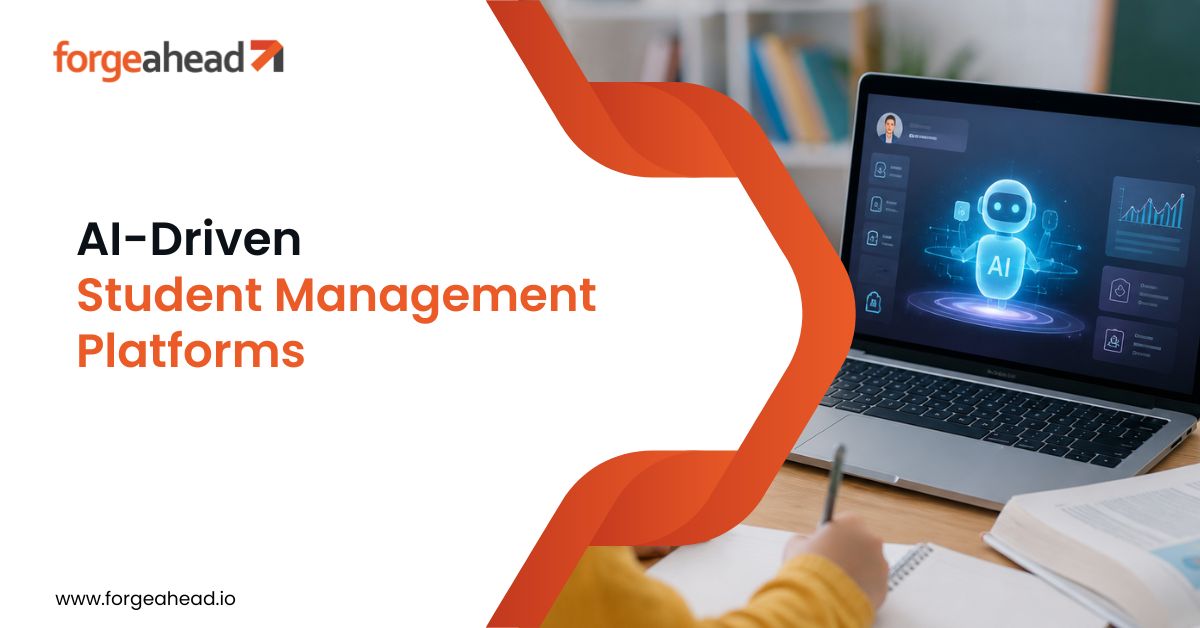
Education systems are shifting away from static, legacy workflows toward intelligence-driven ecosystems. Digital learning platforms and student management systems (SMS) function as more than repositories for content or attendance, taking on a more active role in the academic journey. AI-powered digital learning solutions now enable instruction that responds to student behavior, performance, and engagement patterns in real time. As the global AI in education market continues to expand, the focus has moved from digitization to structured, adaptive intelligence.
Evolution of Digital Learning Systems
Early digital learning platforms functioned as digital filing cabinets, supporting content delivery but offering limited understanding of learner behavior. AI-driven learning management brings contextual awareness that connects learning activity with ongoing student performance. Modern environments use analytics and recommendation engines to treat learning as a continuous stream of data rather than isolated assessments.
Rather than a fixed syllabus, interactive content adapts to learner progress. If a student struggles with a concept in a video module, the system can pause, provide a short explanation, or suggest a practice quiz to reinforce understanding. Student progress tracking becomes a continuous narrative built from real time interactions instead of periodic evaluation points.
Role of AI in Personalized Learning
Personalization plays a central role in academic success within modern EdTech. AI models analyze performance data to identify learning gaps before they surface in assessments or grades. Adaptive assessments adjust difficulty in real time based on response patterns, shaping a learning path that reflects each student’s progress.
Multimodal AI expands access to learning by supporting text, audio, and visual inputs within the same system. Students interact with platforms in ways that suit different learning preferences, while natural language interfaces provide continuous learning support. These systems offer instant feedback and explain complex topics in areas such as medicine or engineering with conversational clarity.
AI Driven Transformation of Student Management Systems
While learning platforms handle the “how” of education, student management systems focus on the “who” and “when.” Administrative workflows that once relied on manual data entry are now increasingly automated with AI. Predictive systems support enrollment planning, scheduling, and resource allocation across institutions.
A key application lies in identifying students at risk of dropping out. Engagement and performance signals across platforms feed AI driven student management systems that flag risk patterns well before disengagement occurs. This enables earlier intervention and more structured student support, shifting administrative effort toward timely action rather than late stage response.
Architecture Behind AI-Powered Education Platforms
The success of these platforms depends on a multi-layered architecture:
- Data layer: A unified lake that brings together structured academic records and unstructured inputs such as student sentiment from forums and chat logs.
- AI layer: The intelligence layer that supports predictive modeling, content personalization, and generative tasks.
- Integration layer: The connective layer that links learning management systems, enterprise resource planning tools, and communication platforms to maintain a consistent source of data.
- Real time processing: Systems that enable instant feedback loops, supporting adaptive learning experiences as students interact with content.
- Cloud infrastructure: A scalable foundation that supports heavy traffic loads during peak periods such as exams and admissions.
Key Challenges in AI-Driven Education Systems
Despite the promise, building AI-enabled education platforms brings several challenges. Data privacy remains a key concern, especially when handling sensitive student information under regulations such as the EU AI Act and FERPA, which require strong governance over how data is collected, stored, and used.
Over automation also needs careful control since AI increasingly supports academic and administrative decisions. Human judgment still plays a central role in sensitive evaluations and behavioral context that models alone cannot fully capture.
Explainability adds another requirement. When AI suggests learning paths or flags students, educators need clarity on how those recommendations are generated and what data influenced them.
Emerging Trends in AI for Education
Several emerging trends are shaping the next phase of digital education systems.
- Conversational AI tutors: These systems go beyond basic Q&A and use context from past interactions to adapt explanations based on a student’s learning history and understanding.
- Agentic administrative systems: AI agents manage workflows such as credit transfers and financial aid processing, with human review for final approval.
- Predictive curriculum planning: Institutions use AI insights to align course offerings with evolving labor market needs and in demand skills.
Steps for Implementing AI in Educational Institutions
Successfully transitioning to an AI led model requires a structured approach.
- Assess data readiness: Centralize data from legacy systems into a clean, reliable foundation for AI training.
- Define clear use cases: Start with high impact areas such as student retention and personalized tutoring before expanding into broader automation.
- Prioritize security and compliance: Ensure adherence to data protection standards and maintain audit trails for all AI driven decisions.
- Foster AI literacy: Equip educators and administrators with the skills to work effectively alongside AI tools.
- Implement observability: Use continuous monitoring to track system performance and learning outcomes for ongoing improvement.
Designing Scalable and Reliable Education Platforms
Reliability is non-negotiable in education systems, especially during high-stakes exam cycles where even short disruptions can impact large student cohorts. A significant share of higher education institutions have embedded AI into their operations, increasing the need for systems that support low latency interactions at scale.
This performance depends on cloud-native architectures where data pipelines stay consistent across learning and administrative modules, ensuring updates in learning management systems reflect instantly in official academic records.
Future Direction of AI in Digital Learning Ecosystems
The direction ahead points to end to end AI integration across the student lifecycle. From the first interaction on a campus website to engagement within alumni networks, AI will shape personalized experiences at every stage.
Administrative systems will increasingly support autonomous decision making. Educators will then focus more on mentorship and emotional guidance that requires human understanding and presence.
How Forgeahead Supports AI-Powered Education Systems
Forgeahead focus on the execution side of EdTech modernization. Our work centers on building production ready AI enabled digital learning platforms designed for the complexity of modern education systems. We re-architect legacy education systems into modular, API first platforms that support AI driven learning management.
Our cloud native architectures form the foundation for scalable student management systems with real time data processing and predictive analytics. We use agentic AI to support automation of administrative workflows, while secure, high availability environments protect sensitive academic data and maintain system reliability.
Ready to modernize educational infrastructure with AI capabilities? Contact Forgeahead today to learn how our engineering pods can build your next-generation learning platform.
FAQs
1. How does AI actually improve student retention?
AI tracks engagement patterns such as login frequency and participation levels to identify at risk students early, enabling timely intervention and support.
2. Is student data safe in AI-powered cloud platforms?
Modern platforms use encryption, identity controls, and compliance frameworks to keep student data secure and protected.
3. Will AI eventually replace teachers?
AI handles routine grading and administrative tasks while teachers focus on mentorship, critical thinking, and student development.
4. What is “multimodal AI” in education?
Multimodal AI processes text, audio, images, and video to support different learning styles through flexible content delivery.
5. How long does it take to implement an AI-enabled student management system?
Modular deployment allows specific AI capabilities to go live within a few months, depending on institutional readiness.